In 1985, the red carpet premiere of Desperately Seeking Susan became more than just a movie debut—it turned into a cultural flashpoint. At the center of it all was Madonna, who, by then, was already a rising star in the music world thanks to hits like Holiday and Like a Virgin. Yet on that night, as she walked into the theater with cameras flashing and fans screaming, it became clear that she wasn’t simply a pop singer on the rise. She was redefining what it meant to be a celebrity in the 1980s.
![]()
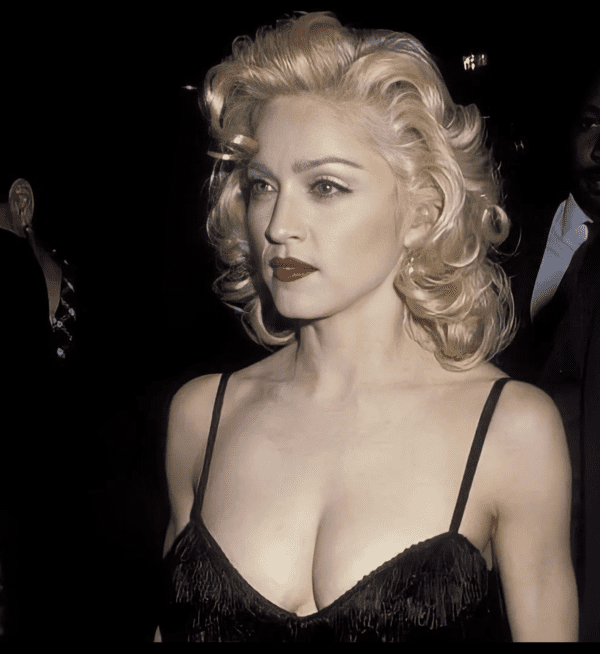
Madonna’s arrival was electric. She didn’t just wear clothes—she wore an attitude. Her look was a perfectly curated yet seemingly effortless mix of punk rebellion, glam sensibility, and downtown New York grit. Layers of lace, fitted leather jackets, oversized bows, crucifix necklaces, bangles stacked up her arms, and those now-iconic fingerless gloves became more than accessories—they were symbols of a new kind of self-expression. She exuded a “take me as I am” confidence that clashed with Hollywood’s polished elegance, and that clash became her magic. Critics may have debated the tastefulness of her style, but no one could deny its impact.
For many young women watching from afar, Madonna’s fashion choices were revolutionary. They weren’t about perfection—they were about personality. She gave permission to mix high and low fashion, to make thrift-store finds as powerful as designer pieces, and to use clothing as a form of rebellion. Teenagers across America and beyond imitated her layered necklaces, tousled hair, and bold makeup, launching what came to be known as the “Madonna wannabe” phenomenon. For the first time, a red carpet wasn’t only about Hollywood glamour—it was about street style meeting stardom.
![]()
The premiere also marked Madonna’s transition into film. Desperately Seeking Susan wasn’t her first time on camera, but it was her first major role that captured her personality so vividly. She played Susan, a free-spirited drifter who embodied the same mix of mystery, charisma, and defiance that Madonna herself projected in real life. The line between character and performer blurred, making the film feel like an extension of Madonna’s own myth-making.
The movie was a surprise hit, resonating with audiences who saw in Susan—and by extension, Madonna—an alternative to the ordinary. It was about women searching for identity, freedom, and excitement outside traditional expectations. Madonna’s performance wasn’t just acting; it was a continuation of her ongoing statement: that women could be unapologetically bold, messy, stylish, and in charge of their own destiny.
![]()
But perhaps the most important thing about that 1985 moment was the cultural message it carried. Madonna wasn’t simply stepping into Hollywood; she was reshaping it. Up until then, pop stars who crossed into film often struggled to be taken seriously. Madonna, however, used her musical fame as a launchpad, and her film debut as proof that she was a multi-platform force. She was showing the world that the boundaries between music, fashion, and film could be torn down—and she was the one to tear them.
The press quickly caught on. Headlines weren’t just about the movie’s plot or reviews—they were about Madonna’s presence, her clothes, her impact. For some, she was scandalous, a challenge to traditional ideas of femininity and celebrity. For others, she was thrillingly fresh, a burst of authenticity in an industry built on polished illusions. Either way, she was impossible to ignore.
![]()
![]()
Lolo Wood’s Glow-Up Journey – Before & After Fame
![]()
Why Love, Victor Is the Coming-of-Age Series We All Needed
![]()
Power, Resistance, and Drama: The Handmaid’s Tale Cast Breakdown
![]()
Lolo Wood’s Glow-Up Journey – Before & After Fame
![]()
Why Love, Victor Is the Coming-of-Age Series We All Needed
![]()
Power, Resistance, and Drama: The Handmaid’s Tale Cast Breakdown
Her timing could not have been more perfect. The 1980s were a decade hungry for reinvention and rebellion. MTV had transformed how music and image intersected, giving rise to stars who weren’t just heard but seen. Fashion was louder, bolder, more experimental, and Madonna was the embodiment of that shift. She wasn’t just riding the wave of pop culture—she was shaping it.
Looking back, the premiere of Desperately Seeking Susan wasn’t just another stop on Madonna’s rise—it was a turning point. It showed that she was not content to be confined to one lane. Music was only the beginning. She wanted film, fashion, influence, and above all, control over her narrative. And she got it. Over the decades, Madonna would continue to reinvent herself—sometimes controversially, always unapologetically—but that 1985 night crystallized the blueprint.
![]()
The cultural ripples from that moment are still felt today. Contemporary artists like Lady Gaga, Rihanna, and even Billie Eilish owe part of their artistic freedom to the path Madonna carved. The mix of music, fashion, and visual storytelling that is now standard in pop culture was, in many ways, pioneered by her ability to command attention across mediums.
When we revisit photos of Madonna on that red carpet—the layered lace, the messy curls, the knowing smirk—it’s not just nostalgia. It’s a reminder of how one woman stepped into a premiere and shifted the direction of pop culture. She showed that being a star wasn’t about fitting in—it was about standing out, about creating a persona so magnetic that the world had no choice but to watch.
![]()
In the end, the 1985 Desperately Seeking Susan premiere was more than just an introduction to Madonna the actress. It was the announcement of Madonna the icon. From that night forward, she wasn’t simply performing for audiences—she was leading them, daring them to see fame, fashion, and femininity in entirely new ways.
Madonna didn’t just walk the red carpet. She claimed it, rewrote its rules, and transformed it into a stage where self-expression mattered more than tradition. And in doing so, she didn’t just define the 1980s—she defined what it meant to be an icon for generations to come.