![]()
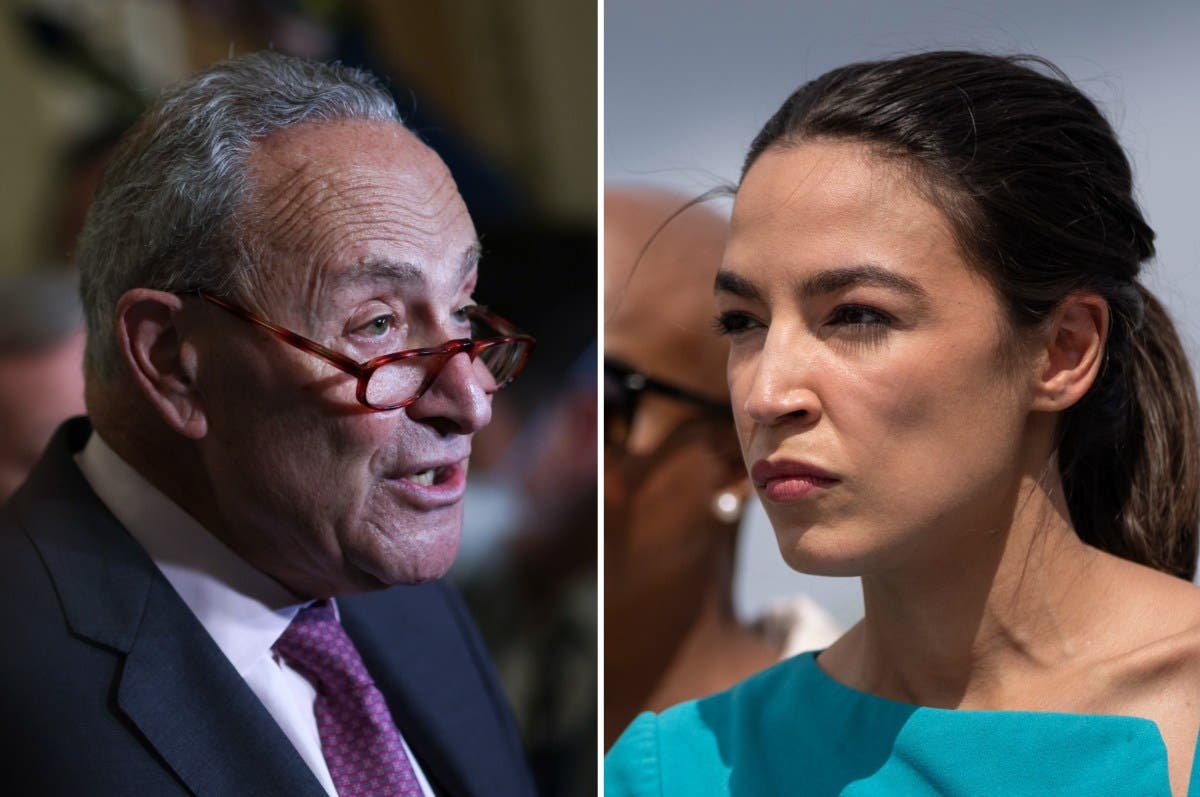
Senate Minority Leader Chuck Schumer (D-NY) has found himself increasingly isolated within his own party, as more than a dozen Democratic senators voted with Republicans to confirm one of President Donald Trump’s key nominees, David Perdue, for the role of U.S. ambassador to China.This confirmation vote, which ended with a 64-27 tally in favor of cloture, sent a clear message about Schumer’s waning influence and the shifting dynamics within the Democratic Party.Perdue, a former Republican senator from Georgia, has been appointed to a crucial position involving trade and national security, particularly with China, the world’s second-largest economy.The confirmation was not a mere procedural step; it highlighted the growing fractures within the Democratic Party and the difficulty Schumer faces in maintaining cohesion among his own colleagues.The vote was particularly notable because it showcased Democratic senators breaking ranks with their party’s leadership and siding with Republicans, in part to advance Trump’s foreign policy agenda.
![]() Senate Minority Leader Chuck Schumer (D-NY) has found himself increasingly isolated within his own party, as more than a dozen Democratic senators voted with Republicans to confirm one of President Donald Trump’s key nominees, David Perdue, for the role of U.S. ambassador to China.This confirmation vote, which ended with a 64-27 tally in favor of cloture, sent a clear message about Schumer’s waning influence and the shifting dynamics within the Democratic Party.Perdue, a former Republican senator from Georgia, has been appointed to a crucial position involving trade and national security, particularly with China, the world’s second-largest economy.The confirmation was not a mere procedural step; it highlighted the growing fractures within the Democratic Party and the difficulty Schumer faces in maintaining cohesion among his own colleagues.
Senate Minority Leader Chuck Schumer (D-NY) has found himself increasingly isolated within his own party, as more than a dozen Democratic senators voted with Republicans to confirm one of President Donald Trump’s key nominees, David Perdue, for the role of U.S. ambassador to China.This confirmation vote, which ended with a 64-27 tally in favor of cloture, sent a clear message about Schumer’s waning influence and the shifting dynamics within the Democratic Party.Perdue, a former Republican senator from Georgia, has been appointed to a crucial position involving trade and national security, particularly with China, the world’s second-largest economy.The confirmation was not a mere procedural step; it highlighted the growing fractures within the Democratic Party and the difficulty Schumer faces in maintaining cohesion among his own colleagues.
The vote was particularly notable because it showcased Democratic senators breaking ranks with their party’s leadership and siding with Republicans, in part to advance Trump’s foreign policy agenda.Schumer’s failure to prevent this, along with a series of other recent challenges, underscores the struggles he faces as he attempts to hold onto his leadership position.This move by his own colleagues comes at a time when Schumer’s political career is under greater scrutiny. While he remains the leader of the Senate Democratic Caucus, his position is increasingly threatened by both external political dynamics and internal party dissatisfaction.
A Key Nominee and a Changing PartyDavid Perdue’s confirmation marks a major victory for President Trump, who had supported the former senator in his failed attempt to unseat Republican Governor Brian Kemp of Georgia in 2022.Perdue’s nomination to China ambassador was widely regarded as a key part of Trump’s broader geopolitical strategy, particularly given the rising tensions with Beijing over trade practices and national security concerns.Schumer’s inability to unite his party against this nomination, especially when some of his fellow Democrats crossed party lines, reveals the lack of cohesion within the Democratic Party.The infighting between the progressive wing and more moderate members has put Schumer in a difficult position, as he struggles to keep his party unified and focused on its legislative priorities.The increasing popularity of more progressive figures, such as New York Representative Alexandria Ocasio-Cortez (AOC), only compounds Schumer’s problems. As the Democratic Party becomes more divided between its centrist and left-wing factions, Schumer faces pressure from both sides.Growing Discontent Within the Democratic BaseSchumer’s struggles are not confined to the halls of Congress.
He is facing mounting discontent from the Democratic base, particularly among young voters, a demographic that has traditionally been one of the party’s most loyal and energized groups.According to a recent poll from the Harvard Kennedy School’s Institute of Politics, approval of congressional Democrats among young voters has plummeted to just 23%, down from 42% in early 2017.Republicans, on the other hand, have seen a slight improvement in their approval among young voters, with their rating increasing to 29%. While this is still lower than the Democrats’ approval rating among young voters in the past, it signals a shift in the political landscape and indicates that more young people are becoming disillusioned with the Democratic Party’s leadership.Brett Cooper, the host of “The Brett Cooper Show,” expressed concerns that the Democratic Party is becoming increasingly out of touch with its younger voter base. “Democrats are completely out of touch with their voter base,” she said during an appearance on “Fox & Friends.”
![]()
“They are aging out. We do not want them in Congress anymore on the left and the right.”Cooper pointed to aging senators like Dick Durbin, who announced his retirement, as prime examples of a party struggling to maintain its relevance. “You see members of Congress like Dick [Durbin] who are so old,” Cooper said. “Young people feel unrepresented, and they are fed up.”This sense of alienation among younger voters is becoming more pronounced as they witness a political establishment that seems increasingly disconnected from the issues they care about, including climate change, student loan debt, and economic inequality. As young people move further away from the Democratic Party, Schumer’s leadership is under intense pressure to adapt.The Rise of Alexandria Ocasio-CortezOne figure who stands out in this shifting landscape is Alexandria Ocasio-Cortez (AOC), the left-wing firebrand from New York. While Schumer continues to lead the Senate Democrats, AOC’s rise within the party is a clear indication of where the energy of the Democratic base is shifting.A recent survey by Data for Progress found that in a hypothetical 2028 Democratic primary contest between Schumer and Ocasio-Cortez, AOC would win by a wide margin, garnering 55% of the vote compared to Schumer’s 36%.These findings are significant, as they suggest that Ocasio-Cortez’s brand of progressive politics has gained considerable traction within the Democratic Party, particularly among younger voters who are looking for a change in leadership.Schumer, on the other hand, has increasingly become associated with the party’s establishment wing, which is struggling to connect with the shifting priorities of a new generation of Democrats.While Schumer remains in control of the Senate Democratic Caucus, his disapproval rating is the highest among all Democratic figures tested in the survey, further illustrating the growing dissatisfaction with his leadership. In contrast, Ocasio-Cortez enjoys significant popularity within the party, trailing only Bernie Sanders, Kamala Harris, and Elizabeth Warren in terms of favorability.Schumer’s Leadership Under FireSchumer’s leadership is increasingly under fire not just from the right but from within his own party.
The challenges he faces in uniting the Democratic Party have been compounded by the growing influence of figures like Ocasio-Cortez, who are positioning themselves as the future of the party.Schumer’s inability to prevent defections among his own colleagues, as seen with the confirmation of Perdue, is emblematic of the fractures within the party.Furthermore, Schumer’s failure to maintain the support of younger voters is a worrying sign for the long-term prospects of the Democratic Party. As young people continue to grow disillusioned with the party’s direction, Schumer’s role as the leader of Senate Democrats could become increasingly untenable.The growing prominence of Ocasio-Cortez and other progressive voices in the Democratic Party suggests that Schumer may need to adapt to the changing political landscape.The days of centrist leadership within the Democratic Party may be numbered, and if Schumer cannot find a way to connect with younger voters and address the concerns of the progressive wing, his position could be at risk.The Future of the Democratic
PartyAs the Democratic Party continues to struggle with internal divisions, the question of who will lead the party in the coming years remains unanswered. Schumer’s leadership, once seen as a stabilizing force, is now being questioned by a party that is increasingly looking for change.With younger voters turning away from the party and progressive figures like AOC gaining in popularity, Schumer faces an uphill battle to retain control over the direction of the Democratic Party.If Schumer cannot reconcile the growing divide within his party, he risks losing his leadership role to someone more aligned with the progressive wing of the party.The growing popularity of Ocasio-Cortez, along with other rising stars on the left, suggests that the future of the Democratic Party may lie in a more radical direction, one that is more in tune with the desires of younger voters and those who feel left behind by the current political system.In the end, Schumer’s challenges are a reflection of a broader shift within the Democratic Party. As the party continues to grapple with internal divisions and external pressures, the question of whether Schumer can maintain his leadership position will depend on his ability to adapt to the changing political landscape. If he cannot, the Democratic Party may find itself charting a new course, one that is more in line with the aspirations of a new generation of voters.
CONSTITUTIONAL CRISIS: DO YOU SUPPORT A TOTAL PROHIBITION ON NON-CITIZENS RUNNING FOR PUBLIC OFFICE?
![]()
GOP Lawmakers Push to Close Potential Loophole, Reaffirming Citizenship Requirement for All Elected Posts
![]()
The debate over election integrity and the fundamental definition of U.S. political representation has intensified with a pointed question:
DO YOU SUPPORT A TOTAL PROHIBITION ON NON-CITIZENS RUNNING FOR PUBLIC OFFICE? While federal law already mandates citizenship for positions in Congress and the Presidency, the question highlights a growing push by conservatives to close perceived loopholes and prevent non-citizens from holding
any elected position, particularly at the state and local levels.
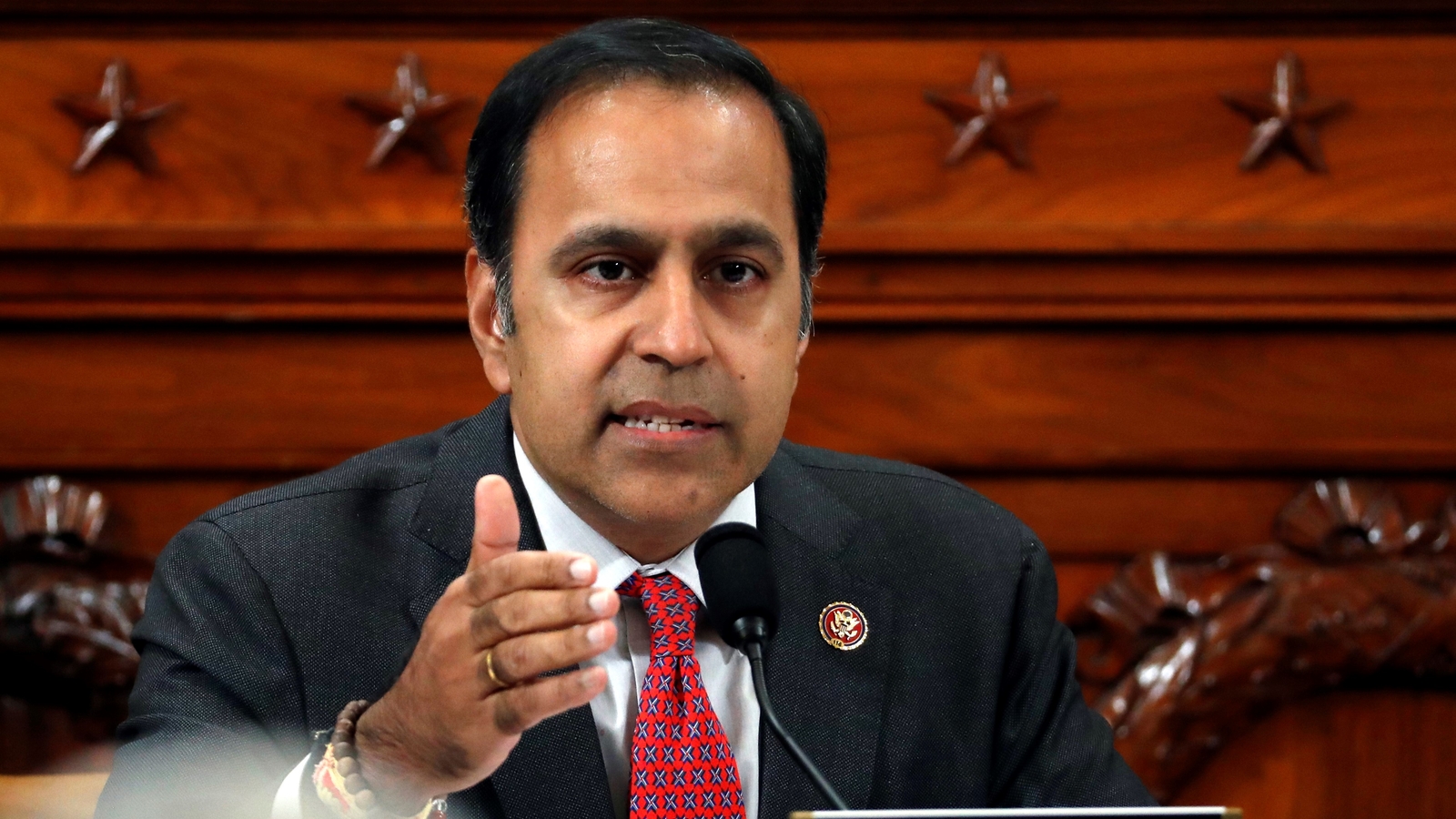
The image prominently features several high-profile progressive Democratic lawmakers—Reps. Pramila Jayapal, Raja Krishnamoorthi, Ilhan Omar, and
Alexandria Ocasio-Cortez (AOC)
—who are often associated with strong pro-immigrant policies, framing the issue as a direct clash with progressive political power.
The Legal and Political Conflict
![]()
The controversy focuses primarily on local and municipal elections, as the U.S. Constitution is clear on federal requirements:
-
Federal Offices: The Constitution mandates that Representatives (like those pictured) must be U.S. citizens for at least seven years, Senators for nine years, and the President must be a “natural born” citizen. All the Representatives shown are citizens and legally eligible to hold office.
-
Local/Municipal Offices: Currently, a few jurisdictions—such as certain cities in California and Maryland—have taken steps to allow non-citizens (often legal residents or green card holders) to vote in local elections or serve on local boards. This is the area targeted by those advocating for a “total prohibition.”
Proponents of the ban argue that allowing non-citizens to hold any public office, regardless of level, fundamentally dilutes the value of citizenship and allows foreign interests to potentially influence U.S. governance, particularly on issues like immigration, schools, and local budgets.
Opponents, largely Democrats and civil rights groups, argue that allowing non-citizens to participate in local governance is crucial for ensuring that communities, regardless of immigration status, have their voices heard on issues that directly impact their daily lives, such as schools and local ordinances. They view the prohibition push as an attempt to strip power from minority communities.
The Progressive Target
The inclusion of Jayapal (who was born in India), Omar (a refugee from Somalia), and the outspoken AOC and Krishnamoorthi is a clear political maneuver. These lawmakers, while fully credentialed citizens, are often criticized by the right for their progressive stances on immigration, asylum, and border enforcement.
By using their images, conservatives seek to tie the perceived “threat” of non-citizen involvement in politics to the broader, disliked policies of the Democratic progressive wing. The visual implication is that the policies these Democrats advocate for could lead to a system where non-citizens gain undue political power.
The debate is less about the current legality of federal offices and more about setting a strict, uncompromising ideological boundary for U.S. political participation.


 Senate Minority Leader Chuck Schumer (D-NY) has found himself increasingly isolated within his own party, as more than a dozen Democratic senators voted with Republicans to confirm one of President Donald Trump’s key nominees, David Perdue, for the role of U.S. ambassador to China.This confirmation vote, which ended with a 64-27 tally in favor of cloture, sent a clear message about Schumer’s waning influence and the shifting dynamics within the Democratic Party.Perdue, a former Republican senator from Georgia, has been appointed to a crucial position involving trade and national security, particularly with China, the world’s second-largest economy.The confirmation was not a mere procedural step; it highlighted the growing fractures within the Democratic Party and the difficulty Schumer faces in maintaining cohesion among his own colleagues.